
Ep 1 | The Business Acumen Podcast
The Business Acumen Gap That Led to Acumen Learning
with Stephen M.R. Covey & Kevin Cope
The Business Acumen Podcast
The Business Acumen Gap That Led to Acumen Learning
with Stephen M.R. Covey & Kevin Cope
"We could do better in the long run with our mission if we became a good business too... There is no margin, there is no mission."
— Stephen M.R. Covey
"We could do better in the long run with our mission if we became a good business too... There is no margin, there is no mission."
— Stephen M.R. Covey
Show Notes
In this pull-back-the-curtain episode, host Stephen M. Covey sits down with two leadership giants: his father, Stephen M.R. Covey (author of The Speed of Trust), and Kevin Cope, CEO of Acumen Learning. Together, they explore the origin story of Acumen Learning, born from a critical gap identified within the legendary Covey Leadership Center during the rise of The 7 Habits of Highly Effective People.
The conversation dives deep into why business acumen is the "missing link" for mission-driven organizations and how financial literacy builds organizational trust, employee engagement, and long-term sustainability.
Key Takeaways for Leaders
1. The Paradox of the Mission-Driven Organization
Many companies focus so heavily on their "why" (mission) that they neglect their "how" (business model). Stephen M.R. Covey explains that becoming a "Third Alternative" company—a business with a mission—allows for greater impact. Without profitability and positive cash flow, a mission is unsustainable.
2. Business Acumen as a Competitive Advantage
Kevin Cope highlights that as companies grow, employees become highly specialized (siloed). While they are experts in marketing, HR, or engineering, they often lose sight of the Total Business Environment. Bridging this gap allows for better decision-making aligned with corporate strategy.
3. Building Trust Through Competence
Trust isn't just about being a "good person" (character); it’s about being a "capable person" (competence). Business acumen gives you the skills and results to be a relevant, trusted partner in any professional setting.
4. The Sales Transformation
Business acumen isn't just for the finance department. When sales teams understand their clients' financial goals and pain points, they evolve from "vendors" into trusted business advisors.
Books
Additional podcast platforms
Listen to The Business Acumen Podcast on Apple Podcasts, Spotify, Overcast, Podcast Addict, Pocket Casts, Castbox, YouTube, Audible, or on your favorite podcast platform.
Podcast Transcript
Podcast Transcript
The Business Acumen Gap That Led to Acumen Learning
with Stephen M.R. Covey & Kevin Cope
Host: Stephen H. Covey Guests: Stephen M.R. Covey (Dad/Co-founder), Kevin Cope (CEO/Co-founder)
Stephen H. (Host):
Today, I’m grateful to be joined by Stephen M. R. Covey—who I should mention is my dad—and Kevin Cope, who is my CEO. We’re pulling back the curtain today to share the story behind the founding of Acumen Learning. Beyond just a founding story, I’m also hopeful that this episode can highlight one of the biggest gaps in the marketplace today and what to do about it.
I thought we’d start by going way back, even before Acumen Learning existed, to the Covey Leadership days. This was around the time that The 7 Habits of Highly Effective People was released, in the late eighties and early nineties. So Dad—and I’m not going to call you Stephen, because it’s just too weird to call you Stephen—at the time, you were the CEO and were working closely with Kevin. My understanding is that you saw a gap within the Covey Leadership organization regarding business acumen. I’m wondering if you could take us back to that time, reflect on what you saw, and tell us what you did about it.
Stephen M.R. Covey:
What was happening at the time was that 7 Habits had come out and was doing great; people were loving it. However, we found that our mission was so big that our financial strength and economic might simply weren't on par with it. We were doing all kinds of great things, but we couldn't make money at many of them. They took a lot of resources, which started to put a financial strain on us.
We had eleven straight years of negative cash flow and a lot of debt. If you do the math, we had high growth but low margins and no outside capital. We were going to run out of cash at some point. We were so mission-driven that we weren't focused enough on running ourselves like a business.
When I became CEO, one of the first things I realized was that we needed to run ourselves like a business. We needed more awareness and business acumen at every level—from the executive team to our salespeople. We realized we could actually do better in the long run with our mission if we became a good business, too. We tried not to present it as an "either/or" choice between being a mission or a business.
We are a "Third Alternative" company. We are a business with a mission—a business that matters and makes a difference. But we had to learn to see ourselves as a business. Kevin and I discussed this often because he was running the sales and delivery organization and I was the CEO. We recognized that we needed to apply business thinking and principles.
We needed business acumen, so we created our own version of it. We bought a book called Finance and Accounting for the Non-Financial Professional, and I asked everyone on the executive team and the extended leadership team to read it. We had to learn how to think like a business. Eventually, we took that training to our salespeople.
The core idea was that we could better serve our mission if we ran ourselves like a mission-driven business. We adopted the mantra: "No margin, no mission." Learning business acumen really helped us; we turned ourselves around financially and figured out a solid business model. With that in place, we had choices and options we never had before. We didn’t run out of cash; instead, we grew and gained enormous financial strength. That was our first foray into the idea that business acumen is a true game-changer. Kevin, did I get that right?
Kevin Cope:
You got it exactly right, Stephen. It was a defining moment for the organization. In fact, your father—and Stephen H., your grandfather—used to say, "No margin, no mission." I really admire companies that get both right: an elevated sense of mission and an elevated sense of the importance of margin. If you have margin in place, it fuels the mission.
Stephen M. R. Covey:
Exactly. It became our mantra, even though it was hard. I had many mission-driven people putting pressure on me, asking, "Why are we slowing down this community initiative?" It was a great initiative, but there was no one to pay for it. We had to realize that if we ran ourselves like a business, we could actually do more for our mission.
Stephen H.:
It’s fascinating that a brand as huge as The 7 Habits might not have had the same impact without pairing it with internal business acumen. Kevin, was there a specific moment when you realized that other companies needed this as well?
Kevin Cope:
That realization actually came after I left the Covey organization in the fall of 2002. Stephen and I were reflecting on what we did at Covey and realized that if it was that important to us, there must be a broader need in the marketplace.
Stephen M. R. Covey:
We saw how it literally turned us around. Because we became financially strong, 7 Habits reached more people, not fewer. We brainstormed and asked ourselves, "Isn't this business acumen approach itself something of value to others?"
Stephen H.:
So you launched Acumen Learning. Kevin, did you assume this was only for startups, or did you think Fortune 100 companies needed it too?
Kevin Cope:
Initially, I assumed it would be good for frontline supervisors because I figured everyone else already understood it. But we quickly learned that even at the senior VP and executive levels of Fortune 100 companies, the business acumen gap is much larger than people think.
As companies grow, people specialize in operations, sales, or marketing. They become experts in their function but lose the big-picture sense of how the company makes money. These senior folks often try to "fly under the radar" regarding their lack of financial knowledge. They’ll say, "Our rank and file need this training," then they sit in the back of the room taking notes. It’s understandable—they get so immersed in their field they don’t have the chance to step back.
Stephen H.:
Kevin, what were those early "startup grind" days like, moving from an executive role to making cold calls for 10 hours a day?
Kevin Cope:
It was one of the hardest and darkest times of my career. It hit my ego head-on. Professionally, it was tough, but personally, it was the best thing for me. I became much more humble and developed a greater appreciation for the basic necessities of life.
I have a lot of empathy for anyone starting a company. It’s not glamorous; it's a tough slog. I credit my wife, Karen; when I was unsure, she was my greatest cheerleader. Our paychecks were very different back then, but she never complained.
Stephen M. R. Covey:
If there was ever an illustration of Grit, as Angela Duckworth wrote about, it’s Kevin. He went through the labor of birthing this company. It was quite remarkable.
Stephen H.:
Why did you choose the name "Acumen Learning"?
Kevin Cope:
"Acumen" was the centerpiece—we define it as understanding how your company makes money and making good decisions around that process. We chose "Learning" rather than "Training" because we wanted to reflect the participant's point of view. Training is what we do; learning is what they do.
Stephen H.:
Let’s shift gears. Dad, you’ve taught millions about trust. How does business acumen fit into the "Character and Competence" model of trust?
Stephen M. R. Covey:
Trust is made of two halves: character and competence. Most people think only of character, but you can be a person of high integrity and still not be trusted with a key project if you don't have the skills to deliver.
Business acumen represents the competence half. It involves your capabilities and your results. If you understand how the company makes money and how you can impact that, you become a more trusted partner, salesperson, and executive. It makes you relevant in a world where performance matters.
Kevin Cope:
To add to that, business acumen is a massive driver of engagement. Gallup estimates the cost of disengagement at $9 trillion globally. People work hard for a paycheck, harder for a person, and hardest for a purpose. When people understand the "big picture" of how a company makes money, they see how they fit in. They feel they have a "seat at the table." This alignment creates both better engagement and better business results.
Stephen H.:
Kevin, have you seen business acumen help restore trust during tough transitions like layoffs or pivots?
Kevin Cope:
Yes. A few years ago, we worked with a major manufacturer that had high distrust between management and a union labor force. The CEO asked me to get the lead negotiators from both sides in a room to talk about the company’s performance.
Once we got them on the same page regarding the company's thin margins and how Wall Street viewed them, the lights went on. They realized the "problem" was the financial situation, not each other. They ended up creating a landmark labor contract that was longer and more mutually beneficial than anything they had done in the past.
Stephen H.:
What makes you most proud of Acumen Learning today?
Kevin Cope:
We are 23 years in, and I’m proud that we have never laid off an employee. We’ve been through the 2008 financial crisis and COVID, but we always entered those challenges with the mindset that we would keep the team intact.
I’m also proud that our course is often the highest-rated training a company provides. People are hungry to understand how they matter. We’ve figured out how to take a "dry" topic like finance and make it engaging and customized.
Stephen M. R. Covey:
I’m proud to be a co-founder. I love that Kevin leads with "1A" being people and culture, and "1B" being economic performance. Usually, it’s the other way around. We want to be a model of how to perform while inspiring trust.
Stephen H.:
Thank you both. This was the start of a movement to help people lead more confidently. In our next episode, I’ll be sitting down with Kevin to break down the 5 Business Drivers. If you want to learn to think like an executive, don’t miss it.
Additional Episodes
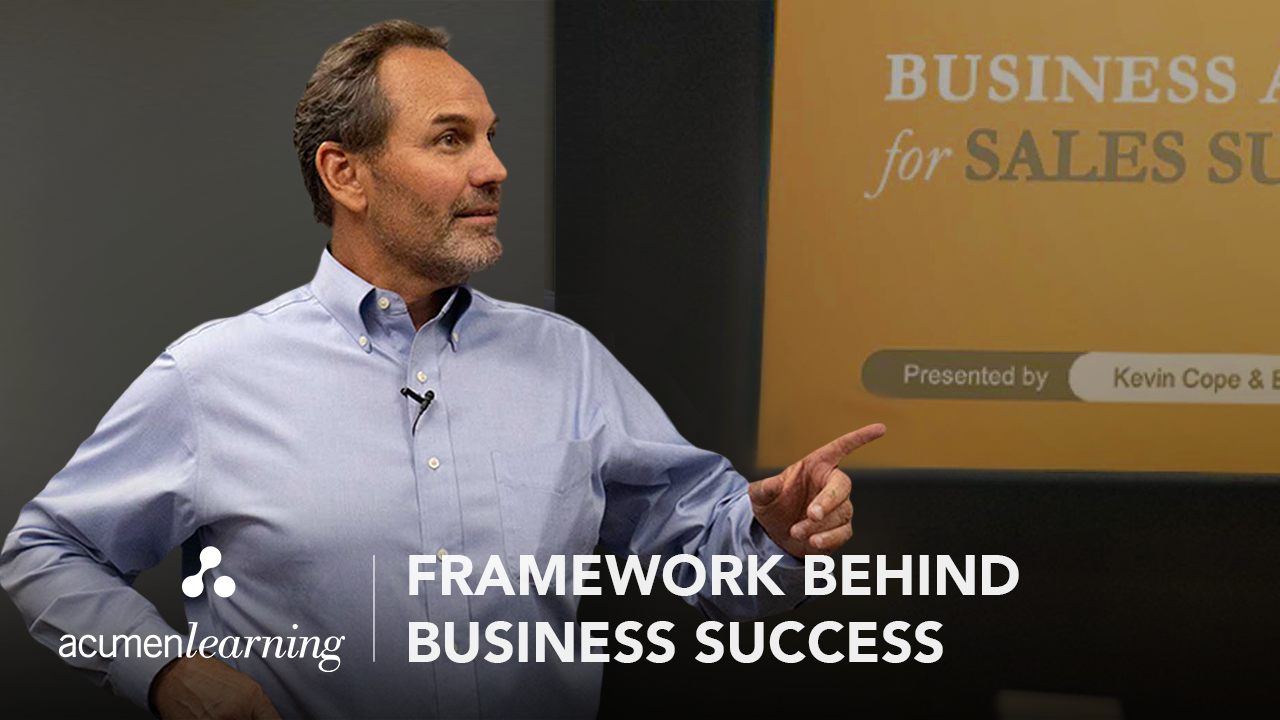
Ep 2 | The 5 Business Drivers Explained Simply with Kevin Cope
Kevin Cope breaks down a simple framework that helps you understand how any business actually works.
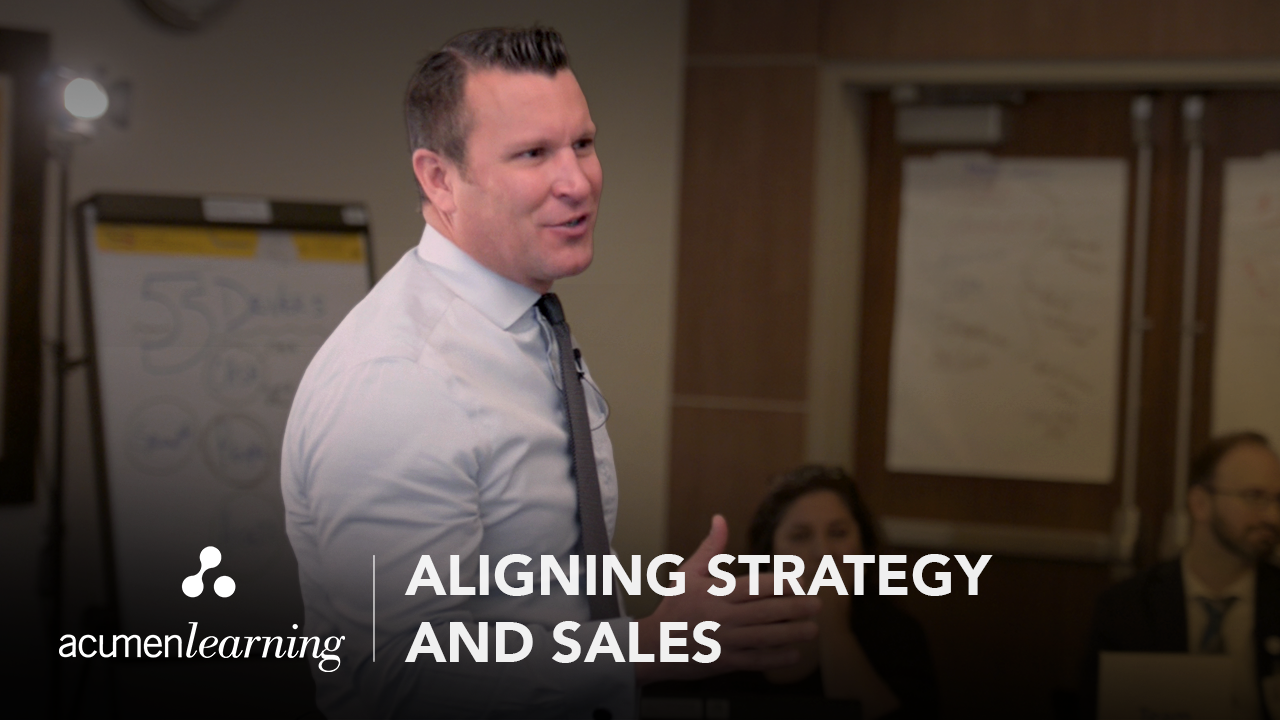
Ep 3 | How to Apply Business Acumen in Sales and Leadership with Ben Cook
Ben Cook, President of Acumen Learning, breaks down how to use the 5 Drivers in day-to-day work across sales alignment.
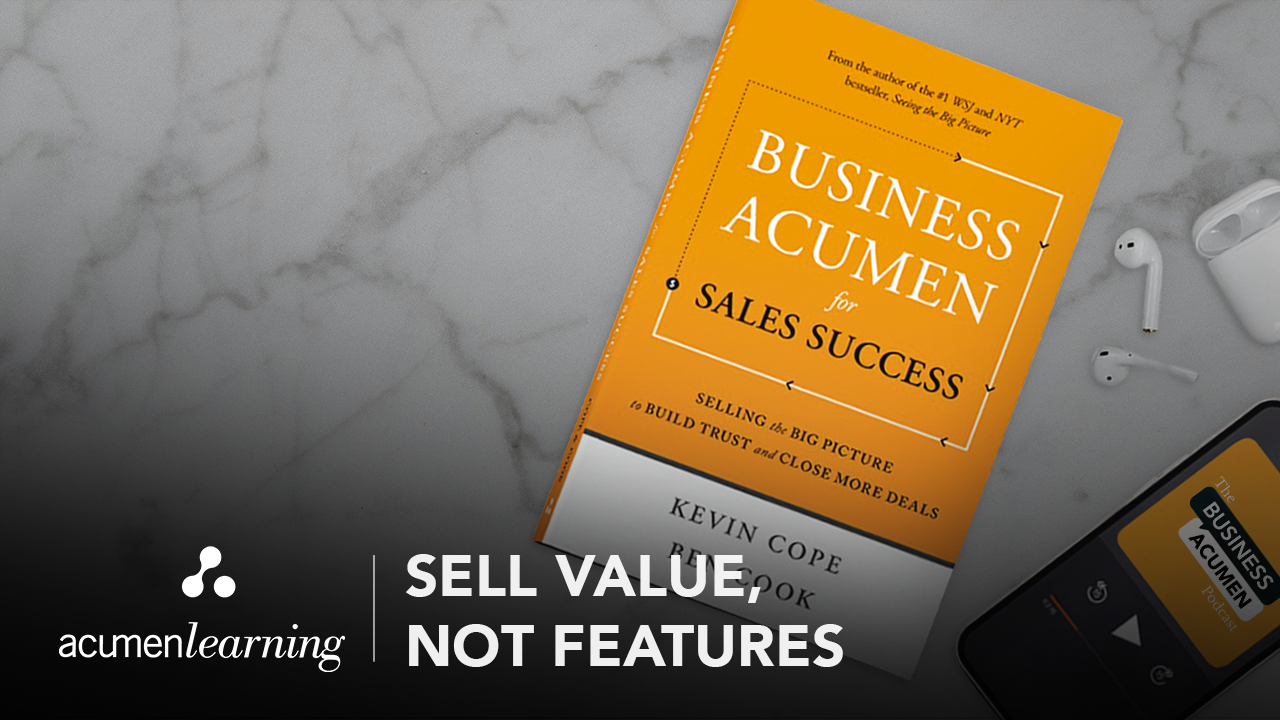
Ep 4 | Inside the Book: Business Acumen for Sales Success
Kevin and Ben discuss their book, Business Acumen for Sales Success, and why it was written now.
© 2026 Acumen Learning
240 North Orem Blvd. Orem, UT 84057, USA
Copyright © Acumen Learning.
All rights reserved.


© 2026 Acumen Learning
240 North Orem Blvd. Orem, UT 84057, USA
Copyright © Acumen Learning.
All rights reserved.