
Ep 2 | The Business Acumen Podcast
The 5 Business Drivers Explained Simply with Kevin Cope
The Business Acumen Podcast - Ep 02
The 5 Business Drivers Explained Simply with Kevin Cope
"Culture may be one of the few remaining competitive advantages in business because people can copy your products and your processes, but it's really hard to copy a culture."
— Kevin Cope
"Culture may be one of the few remaining competitive advantages in business because people can copy your products and your processes, but it's really hard to copy a culture."
— Kevin Cope
Show Notes
In this deep-dive episode, host Stephen H. Covey sits down with Kevin Cope, founder of Acumen Learning and author of the #1 Wall Street Journal bestseller, Seeing the Big Picture. Together, they break down the Five Business Drivers—the core framework used by the world’s most successful executives to navigate complexity and drive results.
Whether you are a frontline employee or a C-suite executive, this episode explains how to bridge the "business acumen gap" and gain a seat at the table by understanding the fundamental ways every company—from a local startup to a Fortune 50 powerhouse—makes money and grows
Key Takeaways for Leaders
1. The 5 Business Drivers Framework
Business can be complex, but it isn’t mysterious. Kevin explains that every organization operates on five essential levers: Cash, Profit, Assets, Growth, and People. While the first three align with standard financial statements, all five are interdependent; a move in one (like aggressive growth) invariably impacts the others (like cash and profit).
2. Eliminating the "Unconscious Competence" Gap
Many senior leaders are "unconsciously competent"—they understand the business but don't know how to teach it to their teams. This creates a disconnect during all-hands meetings. By using a simple, principle-based framework, leaders can ensure every employee has the "line of sight" needed to connect their daily tasks to the company’s financial health.
3. The Centrality of People
While Wall Street focuses on the "outer" four drivers, the "inner" driver—People—is the engine. Kevin highlights that employees who understand the big picture are more engaged. As he puts it: "People work hard for a paycheck, harder for a person, and hardest for a purpose."
4. Business Acumen in the Age of AI
Despite the rise of AI, the fundamentals of business remain unchanged. Kevin argues that business acumen is actually more important now. Having a strong grasp of the five drivers allows you to provide the right "prompts" to AI tools and better interpret the data they generate.
Books
Additional podcast platforms
Listen to The Business Acumen Podcast on Apple Podcasts, Spotify, Overcast, Podcast Addict, Pocket Casts, Castbox, YouTube, Audible, or on your favorite podcast platform.
Podcast Transcript
Podcast Transcript
The 5 Business Drivers Explained Simply with Kevin Cope
Host: Stephen H. Covey Guests: Kevin Cope (Founder of Acumen Learning)
Stephen (Host):
Today, we’re digging into the model at the heart of Acumen Learning: the Five Business Drivers. We’ll also explore the story behind the bestselling book, Seeing the Big Picture. I’m excited to be joined by Kevin Cope, the author of that book and the founder of Acumen Learning. This framework has been used by leaders in nearly every major industry, from healthcare and tech to manufacturing and financial services.
Kevin, for those who have never heard of the Five Business Drivers, how do you explain what they are?
Kevin Cope:
Thanks, Stephen, it's good to be with you. To start, if you look at startups today, about 50% survive the first five years, but many go out of business shortly after. The odds are against you, which indicates how challenging business can be. What’s interesting is that even as you read books and listen to leaders, business often doesn't become less complex.
Many business leaders are "unconsciously competent"—they don't know what they know, so they assume everyone else knows it too. When large organizations hold all-hands meetings to discuss results, much of it goes over people's heads. I’ve been on a quest to create a model that captures the essence of how executives think—how they focus and how they base their strategy—in a framework that is accessible to everyone. You don't need a complex mathematical model; this gives you a clear overview of how a leader thinks.
Stephen:
So, you saw people sitting in meetings or listening to earnings calls where the information was essentially bypasssing them, and you wanted a simple framework to bridge that gap. Is that correct?
Kevin Cope:
That’s exactly it. We sit with tens of thousands of individuals from large organizations each year, and we see every day that the gap between what a person should know about their business and what they actually know is quite large.
Stephen:
Let’s dive into the framework: Cash, Profit, Assets, Growth, and People. How did this take shape? Why these five?
Kevin Cope:
I wanted to take the complexity out of business. I looked at websites, newsletters, and magazines to see what leaders focus on when measuring results. It eventually became clear that business results center around the three financial statements:
- Cash: Reflected in the Statement of Cash Flows.
- Profit: Reflected in the Profit and Loss (P&L) Statement.
- Assets: Reflected in the Balance Sheet.
Those first three drivers reflect how all organizations measure performance and how shareholders make decisions. Growth is the fourth driver because it is the number one thing analysts and shareholders look at; it drives share price.
Finally, the People driver is at the center. Many analysts don't talk enough about employees and customers, but for the other four drivers to be effective, employees must anticipate and meet customer needs. If that relationship is strong, the financial results will follow.
Stephen:
I’ve likened the Five Business Drivers to the work of my grandfather (Stephen R. Covey) and the Seven Habits of Highly Effective People. His was a principle-based framework for personal effectiveness; yours feels like a principle-based framework for business effectiveness.
Kevin Cope:
I can see that comparison. I worked for your grandfather for a decade and taught the Seven Habits. His framework showed the relationship between habits—going from individual to interpersonal to organizational effectiveness. This model does the same. Cash, Profit, Assets, Growth, and People aren't islands; they are interdependent.
For example, if a company focuses on growth, it takes cash to invest. In the short term, that might shrink profit and require more assets. Leaders make those trade-offs. Eventually, you might need to slow growth to build up profit margins and cash reserves again. It is a very synergistic model.
Stephen:
Let's start with cash, and I'll let you take the reins on leading us through this part.
Kevin:
Yeah, first let's talk about why cash is important. You've heard the term cash is king. Cash is a company's oxygen supply. I love what Al Shugart said—he was the founder of Seagate Technology and very successful in the tech space—he said cash is more important than your mother. Now, I think Al loved his mom, but he was making the point that if you don't get cash right in business, nothing else matters. That's why cash is king. When we talk about cash, there are two primary ways companies measure it.
The first is the amount of cash you have at a point in time, or cash on hand. This looks at your accounts, savings, checking, and liquid assets. The second way is cash from operations, or cash flow. That is the amount of cash that comes in over a period of time, say a year, minus the actual cash spent in that same period. Hopefully, you have positive cash flow. Most people are familiar with cash on hand, but cash flow tends to be a newer concept for a lot of folks. It is actually a more important business principle than cash on hand because if a company has positive cash flow—if they’re bringing in more than they’re spending—they can be around forever. That’s why it gets so much attention from leaders and analysts.
You can equate those two principles to a personal standpoint. If you look at your checking account balance at the end of the month, that tells you what you have currently. Looking at cash flow would be taking your monthly salary and subtracting what you actually spent that month. You hope you haven't overdrawn yourself.
As you look at companies, Sears is a great, though extreme, example. I have vivid memories of thumbing through the Sears catalog as a kid. At one point, they were the largest retailer in the world and represented 1% of the US Gross National Product. They were a behemoth, but they lost their way. Toward the end, they had a CEO focused on financial engineering rather than retailing. They stopped investing in the business, the stores got tired, and they started losing money. As they lost money, they sold off primary brands like DieHard and Craftsman. That provided a temporary cash infusion, but they were still bleeding cash. They had negative cash flow, eventually burned through everything, and went bankrupt. It’s a lesson that no matter how big or successful you are, you can’t ignore cash.
On the flip side, you have Apple. They traditionally sit on 150 to 200 billion dollars more in cash than they need. They were actually sued years ago by investors who argued they were mismanaging the company by letting that cash sit without generating a return. As a result, Apple started paying dividends and buying back stock. Because they have such strong cash flow, they are able to be nimble and invest in future opportunities like AI.
There are about five things the average individual in an organization can do to impact cash. The first two are basic: sell more and reduce expenses. Most executive strategies come down to raising sales and doing it more efficiently with less cost. The third is to pay as slow as you can. When working with suppliers, you want to negotiate the longest terms possible to keep that money put to work, though you have to balance that with being a good partner and avoiding late fees. Fourth is to collect fast. Anything you can do to deliver products on time and accurately will help the customer pay sooner. Finally, reduce inventory. Inventory ties up a lot of cash, and if it’s just sitting on a shelf, it’s not generating a return.
Stephen:
Love it. Great overview. All right, let’s go to the second driver: Profit. Where do you start there?
Kevin:
Profit is often called the bottom line because it sits at the bottom of the profit and loss statement. There are at least four ways companies measure it. First is gross profit, which is sales minus the cost of goods sold. Then you have operating profit, or EBIT, which is what's left after operating expenses. Third is net profit, which is the income left after all expenses, interest, and taxes are taken out. Finally, publicly traded companies talk about earnings per share. To improve these, you either sell more or spend less. Companies also buy back their own stock to reduce the number of shares, which increases the earnings per share and improves the stock price.
Walmart is an interesting example. Their net profit margin is only about 3%, which is thin compared to the S&P 500 average of 10 to 12%. However, because they did 680 billion dollars in sales last year, that 3% is a lot of money. Contrast that with Visa, which has over a 50% net profit margin. Companies like Microsoft or Nvidia have higher margins because they sell unique products and can charge more. Retailers like Walmart or Costco have thinner margins because they compete on price for commodity goods like milk. I encourage every employee to be clear on how their company makes money and what those margins are to create a better line of sight.
Stephen:
That’s great. We’ve done cash and profit. The third one is assets.
Kevin:
An asset is anything you own or control that has value. Personally, that’s your house or car. For companies, it’s cash, inventory, buildings, and equipment. The goal isn't to amass as many assets as possible, but to have the right amount to keep the business healthy. Leaders try to balance asset strength—the ability to withstand a downturn—with asset utilization, which is getting the best return on those assets. If you have too much cash, you're strong but the return is low. If you have too much inventory, you can meet every order, but it ties up cash and might become obsolete.
Netflix is a brilliant example of an asset shift. In the early 2000s, they mailed physical DVDs. That was capital intensive because they needed warehouses, shipping, and inventory. When they moved to streaming, they moved away from those tangible assets. They lowered their capital intensity and increased their margins. For an individual to improve assets, the rule is simple: if you don't need it, don't order it. People often buy things just to use up a budget, but that doesn't generate a return. You should also measure the output of your assets. What gets measured tends to get managed and improved.
Stephen:
Now for driver number four: Growth.
Kevin:
Growth is reflected across all financial statements. It’s the idea that your core measures are increasing over time. If you’re not growing, you’re dying—especially in competitive industries like tech. If you stop innovating, customers will move to a competitor who is. Shareholders also expect growth because it drives share price. Plus, growth attracts the best employees because it creates upward mobility and opportunities.
Nvidia is the amazing example right now. In 2004, they were around a 60 billion dollar company. In one year, they more than doubled to 230 billion in sales. They hit the sweet spot for AI computing. That growth has sent their stock price through the roof and made them a magnet for talent. To help a company grow, you have to realize that no matter your role, you are either selling or supporting the sales process.
Stephen:
That leads us to the fifth driver at the center of the model: People.
Kevin:
When companies report earnings, you hear a lot about the first four drivers, but people are often mentioned only in passing. Yet, it’s employees meeting the needs of customers that actually drives the financial results. Long-term thinkers place a huge emphasis on culture. Short-term CEOs might focus only on quarterly results, but enhancing a culture takes years.
Culture is one of the few remaining competitive advantages because your products and processes can be copied, but a performance culture cannot. Costco is a great example here. They’ve been paying living wages and providing benefits for decades, long before other retailers were pressured into it. They recognized that treating the employee well has a direct impact on the other four drivers.
Stephen:
When people are exposed to this for the first time, what is the biggest mindset shift you see?
Kevin:
It’s that feeling of finally being in the know. People realize they can finally connect with what executives are saying during results meetings. It bridges the gap for someone who might be functionally brilliant but hasn't seen the big picture of how the company makes money. It creates engagement because they see how their specific role makes a difference.
Stephen:
Is this framework still relevant today with AI being top of mind?
Kevin:
It is based on the three financial statements, and those aren't going away. Companies will always have to report profit, loss, and cash flow. If anything, AI will help enhance business acumen by helping people analyze those results faster. But you need the framework to know what prompts to use and what questions to ask. I’d encourage everyone to spend 15 minutes a day in business news. Become aware of what is happening outside your company that affects you. Find the outlet that works for you and stay current. It gives you a great insight into how the whole business world is trending.
Stephen:
Kevin, any final advice?
Kevin Cope:
Spend 10 to 15 minutes a day tracking business news. Find an outlet that works for you. Learn what’s trending and what companies are struggling with. It will give you the "big picture" rounding you need to be successful.
Stephen:
Thanks, Kevin. Next episode, we’ll have Ben Cook on to talk about how he uses the Five Drivers to guide strategy and elevate sales conversations. Thanks for listening!
Additional Episodes
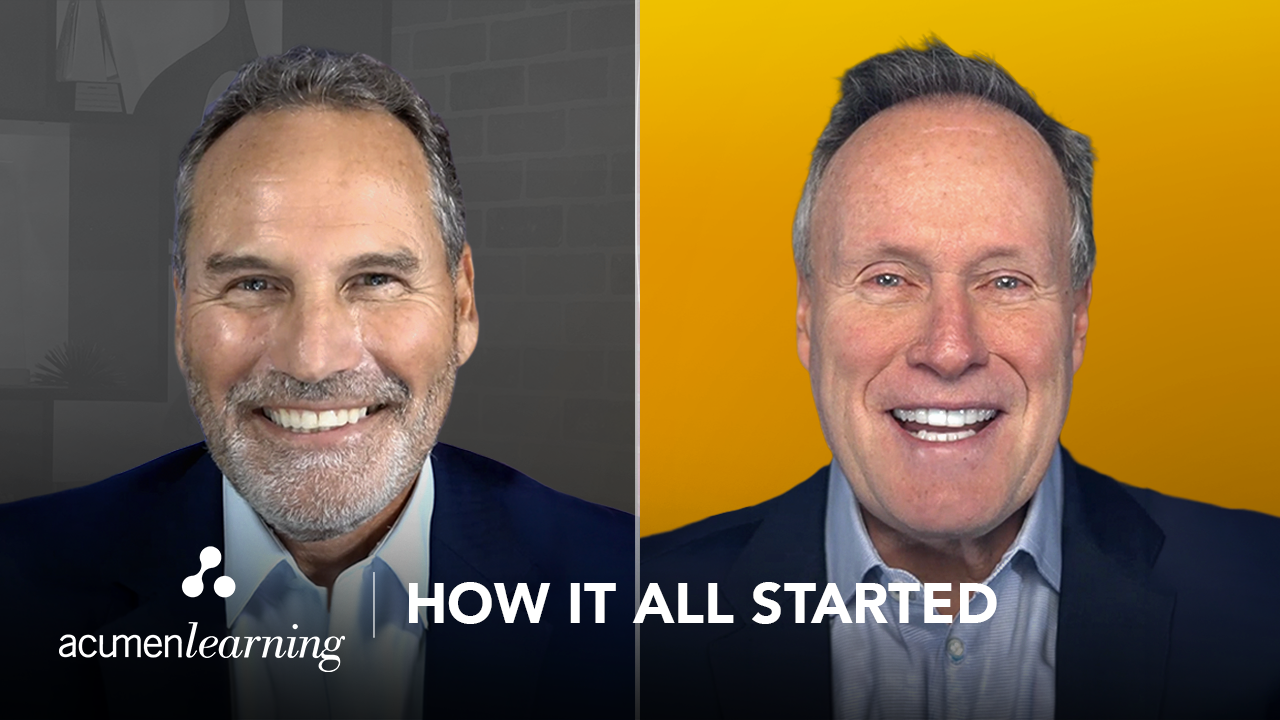
Ep 1 | The Business Acumen Gap That Led to Acumen Learning with Stephen M.R. Covey & Kevin Cope
Stephen M.R. Covey and Kevin Cope share the story behind the founding of Acumen Learning and the problem they couldn’t ignore.
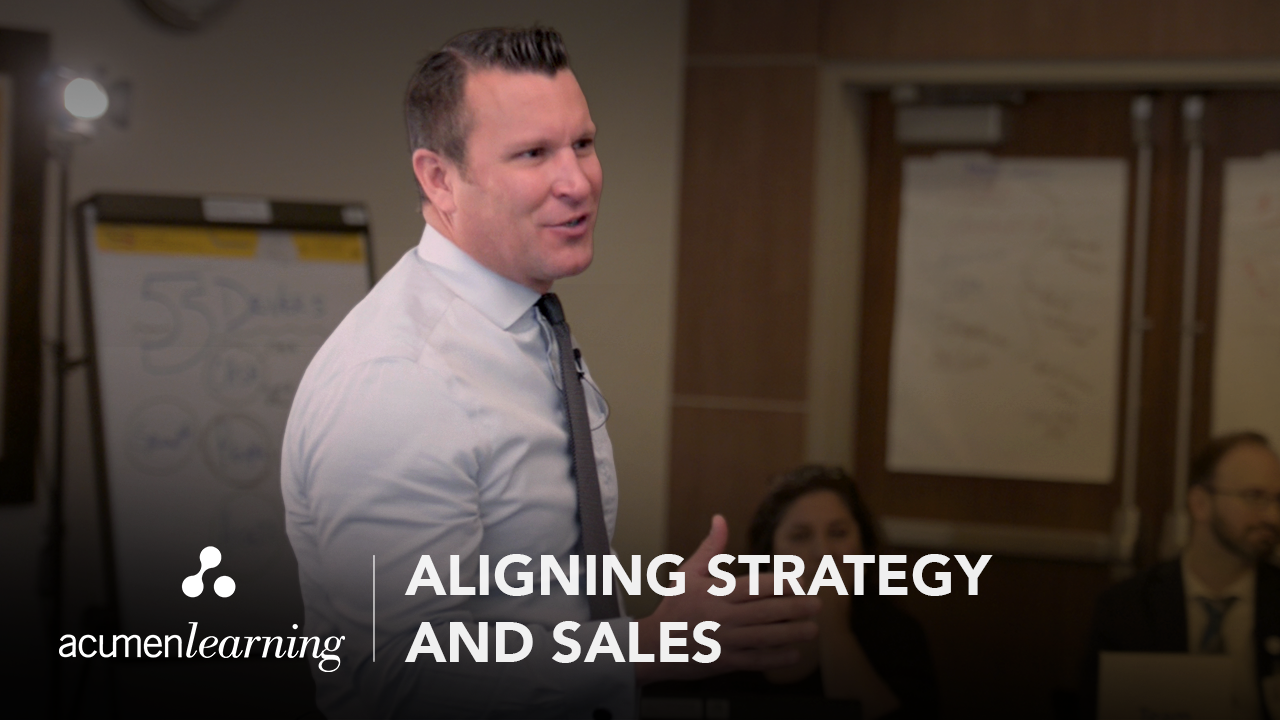
Ep 3 | How to Apply Business Acumen in Sales and Leadership with Ben Cook
Ben Cook, President of Acumen Learning, breaks down how to use the 5 Drivers in day-to-day work across sales alignment.
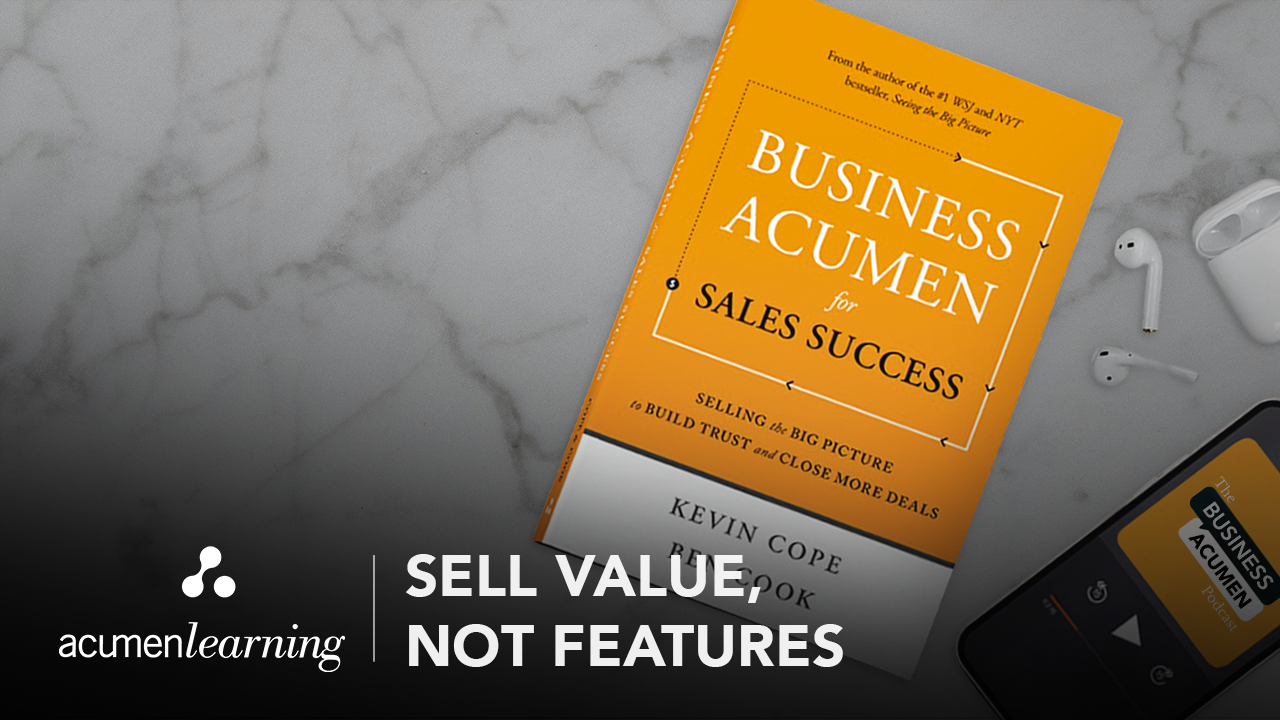
Ep 4 | Inside the Book: Business Acumen for Sales Success
Stephen M.R. Covey and Kevin Cope share the story behind the founding of Acumen Learning and the problem they couldn’t ignore.
© 2026 Acumen Learning
240 North Orem Blvd. Orem, UT 84057, USA
Copyright © Acumen Learning.
All rights reserved.


© 2026 Acumen Learning
240 North Orem Blvd. Orem, UT 84057, USA
Copyright © Acumen Learning.
All rights reserved.